How to date an old photo: clues and a method
A photo rarely shows its date, but most carry clues to it: the cars at the kerb, the cut of a coat, the words on a shop sign, even the look of the print.
That is the game in Rewind: five real photos from history every day, and a timeline to slide to the year each was taken. Every year comes from a dated record, never an upload or scan date, so the clues point to the real year.
The short version: find the newest thing in the frame, note what is missing, and guess inside the window those clues leave.
Start with the photo itself
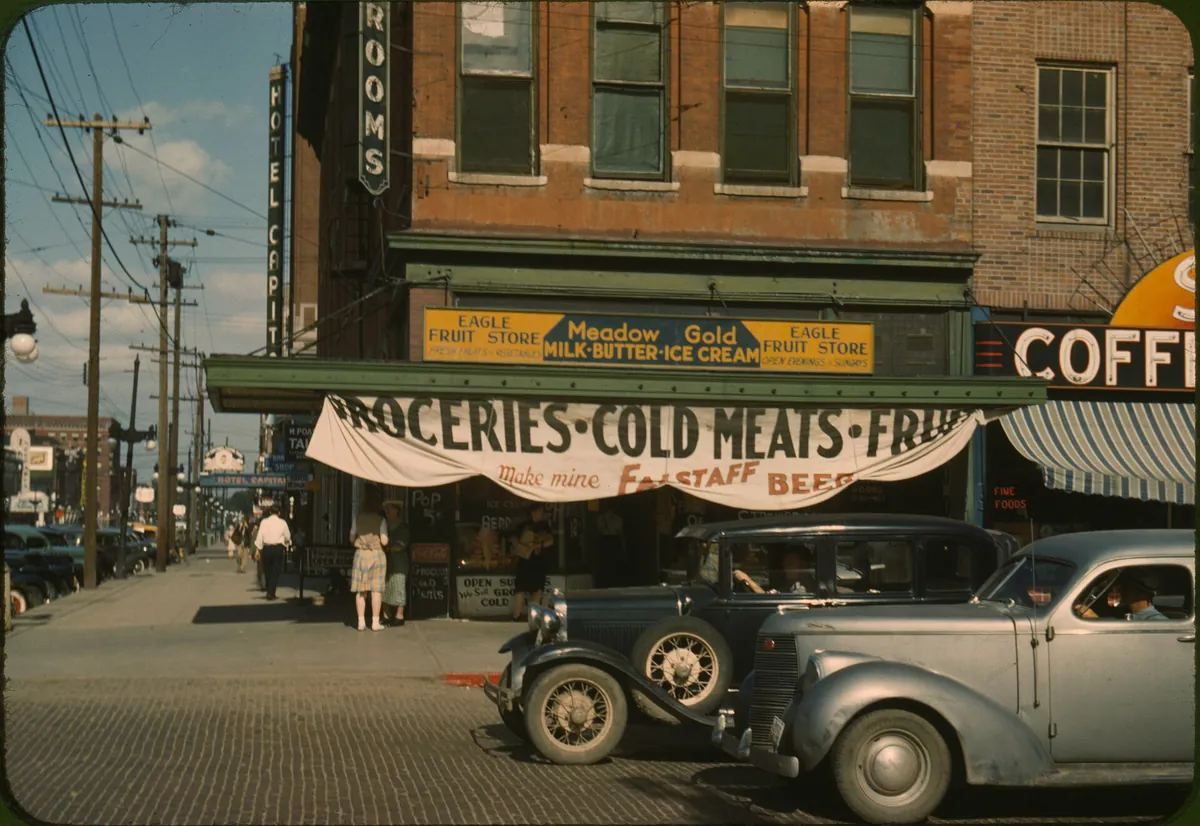
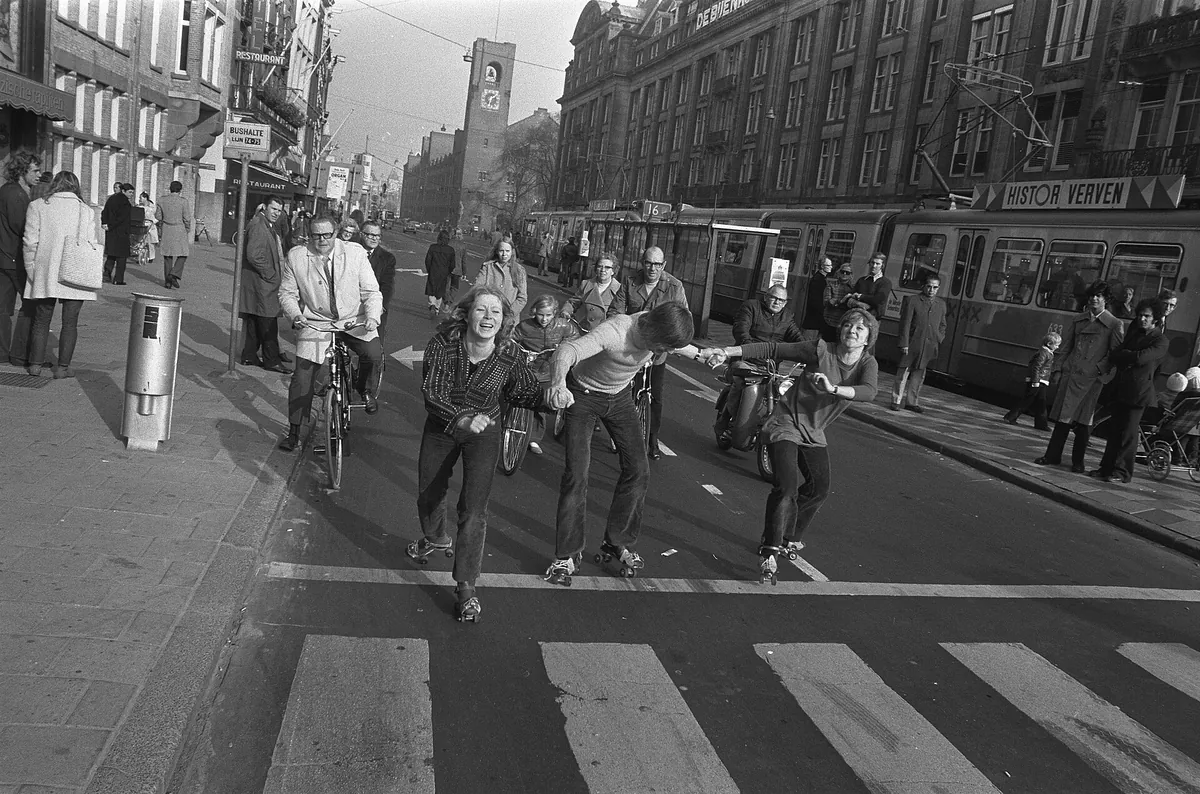
Colour does not make a photo recent. Kodak’s Kodachrome film went on sale in 1935, and most colour photographs date from then on. The Lincoln street corner below is a colour slide from 1942, while the Amsterdam street, from 1973, is black and white. Treat colour as a hint, never a verdict. The print’s condition can help too: the dyes in a colour print fade unevenly, so an old one can shift towards a single colour.
Read what is in the frame
Vehicles
Date the newest thing, not the oldest. Old things linger, so the newest car sets a floor: the earliest year the photo can be from. The Library of Congress notes on the Lincoln photo name a 1938 Studebaker Commander at front right and, behind it, a Ford from about 1930 or 1931. The Ford hardly matters: the Studebaker puts the photo in about 1938 or later.
Vehicles can mislead, too. After the United States cut off trade with Cuba in the early 1960s, Cubans kept their American cars from the 1950s running for decades, so a street of old American cars can be a photo from 2018. In the Havana photo below, a modern car at the kerb behind the pink convertible gives it away, and the crisp, modern look of the image agrees.

Clothes and hair
Hats, hemlines, collars, hairstyles and trouser cuts change with fashion, so they place a photo in an era. Women’s fashions changed more than men’s, so they usually date a photo more closely. Judge the whole crowd, not one person: anyone can dress in an old style. Fashions also come back. Bell-bottoms were in fashion from about 1967 to 1978 and returned in the 1990s, so check the rest of the scene before settling on the seventies.
Signs, lettering and prices
Nothing can name or price something that does not exist yet, so words are some of the most precise clues in a photo. Read every word, and every number plate, which may show a registration year. The sign at the lower right of Rewind’s Grand Central photo (Rewind #13) reads “Subway Entrance”. New York’s subway opened on 27 October 1904, so the photo is from 1904 or later.
Prices are clues as well. British prices in pounds, shillings and pence point to 1971 or earlier, because the pound went decimal on 15 February 1971. A price in euros alone points to 2002 or later: euro notes and coins were introduced in 12 countries on 1 January 2002. Lettering styles change over the years too, but they are a softer clue.
Technology
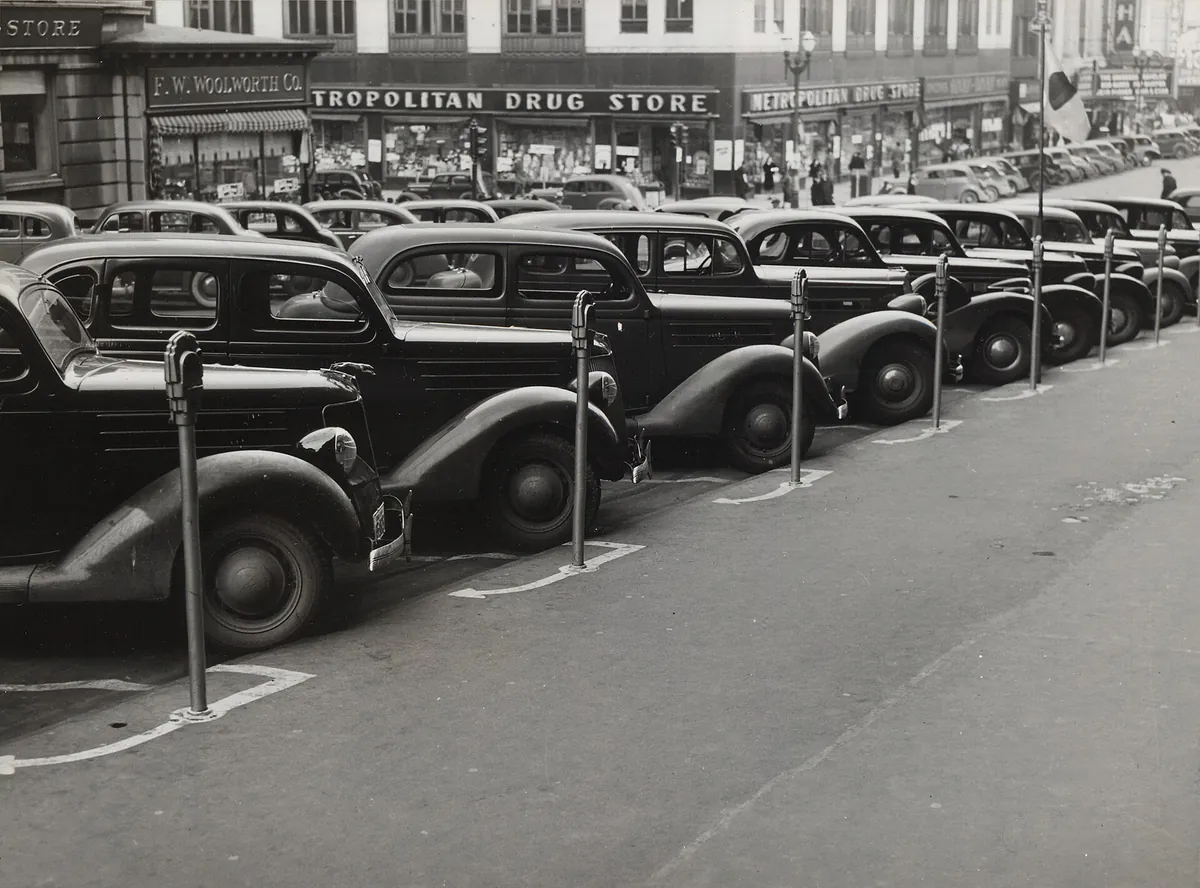
Every machine has a start date, and some have an end date. Parking meters date from 16 July 1935, when Oklahoma City installed them, so a street lined with meters, like the Omaha one below, is from 1935 or later. Space shuttles give you both ends: NASA’s fleet flew 135 missions between 12 April 1981 and 21 July 2011, so a shuttle lifting off puts a photo inside those years.
Buildings and landmarks
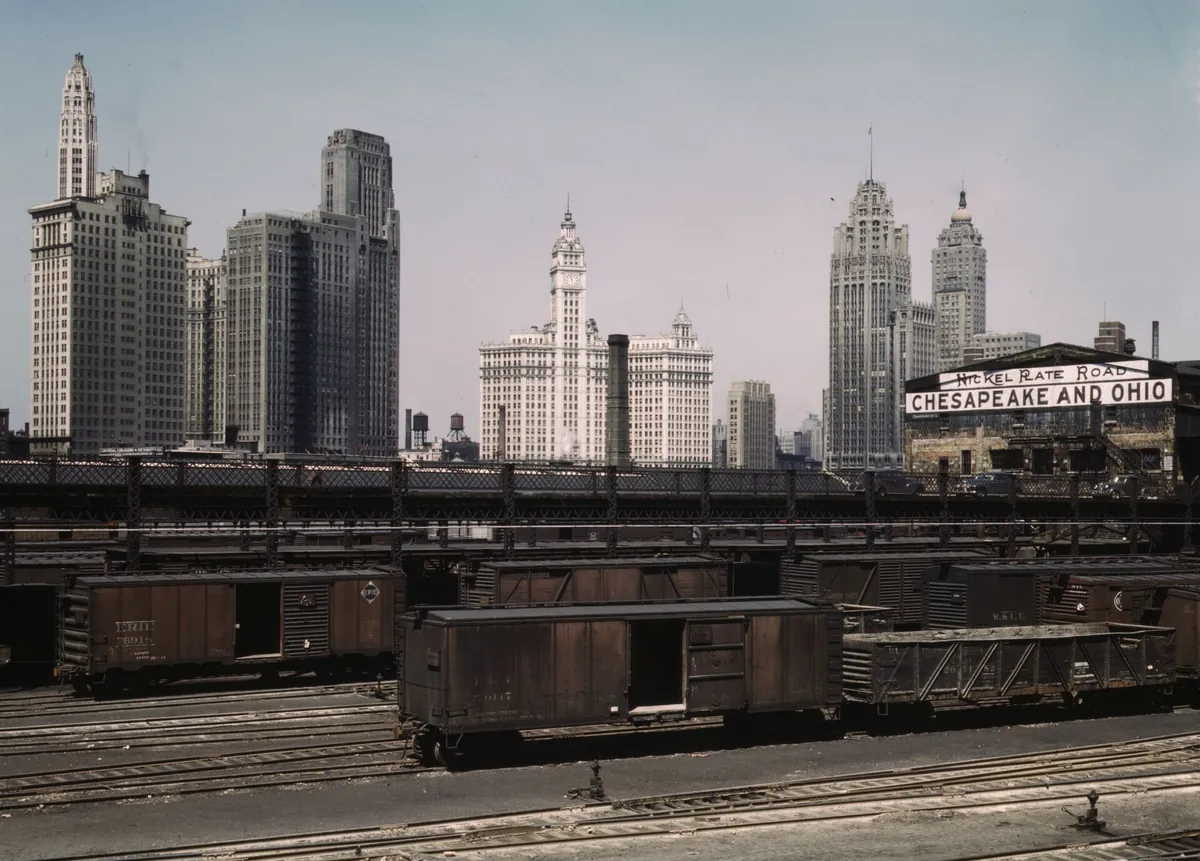
Buildings set floors too, as big ones have recorded completion dates. In the Chicago photo below, the white clock tower at the centre belongs to the Wrigley Building. That tower was finished in 1921 and the whole building in 1924, so the photo is from 1921 or later.
What is missing counts as much. New York’s Twin Towers rose from 1968 and were destroyed on 11 September 2001, so a view of Lower Manhattan where they should be but are not is from before they rose or after 2001.
Put the clues together
Clues rarely give a year; they give limits.
- List every dated clue and mark it as a floor (the photo is not older than this) or a ceiling (it is not newer than this).
- The highest floor and the lowest ceiling mark your window.
- If one clue pins down a single year, such as a dated poster or a famous event, take it and go for the full 200 points.
- Otherwise guess inside the window, leaning towards the clue you trust most.
Rewind scores 200 for the exact year and 8 points less for every year off: a green square within 2 years (184 or more), yellow within 8 (136 or more), orange within 15 (80 or more), red beyond that, and nothing at all from 25 years off. So the middle of a window you trust is a safe pick.
Try it on the Amsterdam photo. Flared trousers suggest about 1967 to 1978. If the photo is in that window, a guess of 1972 or 1973 is never more than six years off, which is worth at least 152 points. Then look at the road: skaters and cyclists where the cars should be. The Netherlands held ten car-free Sundays between 4 November 1973 and 6 January 1974, nine of them in 1973. If you know that, back 1973, the photo’s year, for the full 200.
When clues point to two different eras, the halfway year can be the worst answer. Torn between 1940 and 1980, a guess of 1960 scores 40 whichever is right. Picking one scores 200 or nothing: 100 on average if it is a coin toss. Back the era with the better evidence.
Before you lock in, tap the photo to open it full screen and zoom in: a number plate, a poster or a price tag can settle it.
Try it on real photos
Rewind gives you five real photos from history every day, free and with no sign-up: play today’s Rewind.
For more practice, use any past puzzle as a quiz: the years are behind Show answers. Rewind Endless deals photo after photo, and you can try a run in its Cities & landmarks or On the move pack.
The photos in this guide come from the Library of Congress, the Dutch National Archives and Wikimedia Commons. Witsday isn’t affiliated with or endorsed by any of them.
Sources
- Wikimedia Commons: Eagle Fruit Store and Capital Hotel, Lincoln, Nebraska
- Wikimedia Commons: Architecture Travel City Street Tourism Cuba
- Wikimedia Commons: Rolschaatsers en fietsers op een autoloze straat
- Wikimedia Commons: Trains and Chicago Skyline by Jack Delano, 1943
- Wikimedia Commons: Cars parked diagonally, Omaha, Nebraska
- Wikipedia: Kodachrome
- Legacy Tree: How to Date Old Family Photos
- NEDCC: Types of Photographs, part 2: Color
- Hagley Library: The Case of the Mysterious Red Spots
- University of Vermont: Dating Historic Images
- Wikipedia: United States embargo against Cuba
- Wikipedia: Yank tank
- Wikipedia: Bell-bottoms
- Wikipedia (Dutch): Autoloze zondag
- Wikipedia: Grand Central–42nd Street station
- Royal Mint Museum: Decimalisation
- European Central Bank: Initial changeover (2002)
- Wikipedia: Parking meter
- NASA: Space Shuttle
- Wikipedia: Wrigley Building
- Wikipedia: World Trade Center (1973–2001)


